
japan earthquake today Key Takeaways
Staying informed about the japan earthquake today is crucial for safety and preparedness. This guide provides the latest confirmed details on seismic activity, its impacts, and essential context for understanding Japan’s earthquake resilience.
- japan earthquake today information should be sourced from official channels like the Japan Meteorological Agency (JMA) for real-time accuracy.
- Immediate actions include following tsunami warnings, dropping to the ground, and taking cover during shaking.
- Long-term preparedness involves securing your home, creating an emergency kit, and having a family communication plan.
Table of Contents
- Latest Japan Earthquake News and Critical Details
- Understanding Seismic Intensity in Japan
- Assessing the Impact of Today’s Earthquake in Japan
- Infrastructure and Economic Disruption
- Historical Context of Earthquakes in Japan
- Lessons from Past Disasters
- Essential Earthquake Safety Tips and Immediate Actions
- What to Do After the Shaking Stops
- Creating Your Japan Earthquake Preparedness Guide
- Step 1: Secure Your Home
- Step 2: Assemble an Emergency Kit
- Step 3: Develop a Communication Plan
- Ongoing Updates and Official Resources for the Japan Earthquake
- Useful Resources
- What should I do first when I get an earthquake early warning alert?
- How reliable is Japan’s Earthquake Early Warning (EEW) system?
- Where is the safest place to be in my home during an earthquake?
- Should I turn off the gas immediately after an earthquake?
- What does a "Tsunami Warning" versus a "Tsunami Advisory" mean?
- How can I get information if the power and internet are out?
- Is it safe to use the elevator during or after an earthquake?
- What should be in my basic emergency "go-bag"?
- How often do major earthquakes occur in Japan?
- What is the "Shindo" scale and how is it different from magnitude?
- Are modern Japanese buildings really earthquake-proof?
- What should tourists in Japan do during an earthquake?
- How can I prepare my smartphone for disaster communication?
- Why is it important to have cash after a major earthquake?
- What are the main risks inside a home during shaking?
- How long should I be prepared to be self-sufficient after a big quake?
- Can earthquakes trigger other disasters in Japan?
- What is the best way to help after a major earthquake in Japan?
- Are there specific preparedness steps for people with disabilities or the elderly?
- How can I check if my area is at high risk for liquefaction or landslides?
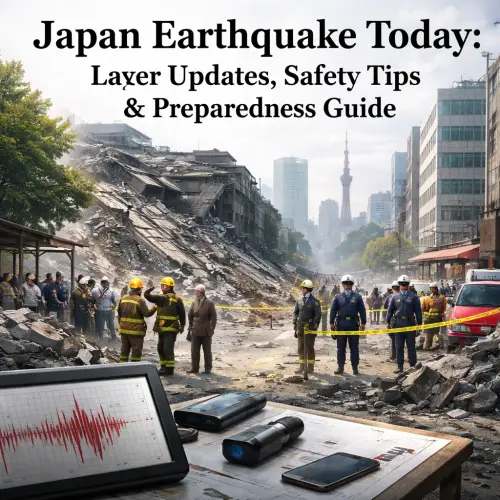
When news breaks of an earthquake today Japan, it triggers immediate concern both domestically and internationally. Japan’s sophisticated monitoring systems and public alert networks provide critical, real-time data that shapes the initial response. This article consolidates the latest confirmed information on seismic events, details their potential impacts, and offers a vital guide to safety and preparedness in one of the world’s most seismically active nations.
Latest Japan Earthquake News and Critical Details
For any Japan earthquake, the most critical information comes from official sources in the immediate aftermath. This includes the precise magnitude, epicenter location, depth, and time of the event, as reported by the Japan Meteorological Agency (JMA). Following a significant tremor, the JMA issues prompt assessments on the potential for aftershocks and, most critically, any tsunami warning Japan for coastal regions. These warnings are categorized by expected wave height and urgency, dictating evacuation protocols for millions of residents.
Understanding Seismic Intensity in Japan
Beyond the Richter or moment magnitude scale, Japan uses the Shindo scale to measure how strongly the shaking is felt at a specific location. This scale, ranging from 0 to 7, is more relevant for understanding local damage potential than the magnitude at the epicenter. A lower-magnitude quake at a shallow depth near a populated area can register a higher Shindo intensity and cause more damage than a stronger, deeper quake farther away.
Assessing the Impact of Today’s Earthquake in Japan
The impact of a seismic event unfolds in stages. The primary concerns are immediate human safety and infrastructure integrity. Initial reports focus on potential casualties, injuries, and the structural damage to buildings, roads, and bridges. Utility disruptions—power outages, water main breaks, and gas leaks—are common secondary effects that complicate rescue and recovery efforts. For coastal quakes, the issuance and potential impact of a tsunami warning Japan becomes the paramount concern, with evacuation orders for low-lying areas.
Infrastructure and Economic Disruption
Japan’s robust building codes minimize collapse, but earthquakes can still halt transportation networks. Bullet trains (Shinkansen) automatically stop, airports suspend operations for runway checks, and major highways may close for inspection. These disruptions have a cascading effect on logistics, commerce, and daily life, often lasting hours or days after the shaking stops.
Historical Context of Earthquakes in Japan
To understand the japan earthquake today, one must view it within the nation’s long seismic history. Japan sits at the convergence of four tectonic plates, making it exceptionally vulnerable. Major events like the Great Kanto Earthquake (1923), the Great Hanshin (Kobe) Earthquake (1995), and the Great East Japan Earthquake (2011) have profoundly shaped the country’s disaster preparedness, building standards, and public consciousness. Each tragedy has led to technological advancements, such as the nationwide Earthquake Early Warning (EEW) system, which provides precious seconds of alert before strong shaking arrives.
Lessons from Past Disasters
The 2011 Tohoku earthquake and tsunami was a pivotal moment, demonstrating that even the most prepared nation can face compound, catastrophic disasters. It led to revised tsunami defense strategies, higher seawalls, and more robust nuclear safety regulations. This historical context underscores why preparedness is a continuous, evolving practice in Japan.
Essential Earthquake Safety Tips and Immediate Actions
When you feel shaking or receive an alert, your immediate actions can save your life. The universal protocol is Drop, Cover, and Hold On. Drop to your hands and knees to avoid being knocked over. Take cover under a sturdy table or desk, protecting your head and neck. Hold on to your shelter until the shaking stops. Do not run outside during the shaking, as falling debris is a major cause of injury.
What to Do After the Shaking Stops
Once safe, check for injuries and extinguish any small fires if it is safe to do so. Be prepared for aftershocks. If you are near the coast and a tsunami warning Japan has been issued, evacuate immediately on foot to higher ground or a designated evacuation building. Do not wait to see the wave. Use stairways, not elevators, and follow official instructions.
Creating Your Japan Earthquake Preparedness Guide
Preparation is your best defense. Every household and business should have a comprehensive plan.
Step 1: Secure Your Home
Conduct a “hazard hunt” to prevent injuries and damage. Secure heavy furniture like bookshelves and cabinets to wall studs with metal brackets. Use film on windows to prevent shattering. Ensure your water heater and gas appliances are strapped down. Know how to shut off your gas and water mains.
Step 2: Assemble an Emergency Kit
Your kit should sustain your household for at least 72 hours. Essential items include:
- Water (at least 3 liters per person per day)
- Non-perishable food and a manual can opener
- First-aid kit, prescription medications, and masks
- Flashlight, battery-powered radio, and extra batteries
- Cash in small denominations, copies of important documents
- Sturdy shoes, warm clothing, and a blanket
Step 3: Develop a Communication Plan
Designate an out-of-area contact person, as local lines may be jammed. Family members should know how to send a Disaster Emergency Message via services like NTT’s Web171. Agree on meeting points both near your home and outside your neighborhood.
Ongoing Updates and Official Resources for the Japan Earthquake
In the dynamic aftermath of an event, rely on official channels for verified information. Avoid spreading unconfirmed rumors on social media. Key resources for the latest Japan earthquake news include:
| Organization | Resource For | Best For |
|---|---|---|
| Japan Meteorological Agency (JMA) | Official earthquake info, tsunami warnings, forecasts | Most accurate, real-time seismic data |
| NHK World | English-language news broadcasts and alerts | Comprehensive updates and safety instructions |
| Local Municipal Government Websites & Apps | Evacuation orders, shelter locations, local updates | Hyper-local, actionable information |
| Fire and Disaster Management Agency (FDMA) | Damage assessments, casualty figures, response efforts | Consolidated impact data |
Useful Resources
For the most current and authoritative information, always refer to these primary sources:
- Japan Meteorological Agency Earthquake Early Warning Page – Official source for all seismic data and tsunami warnings.
- NHK World News – Reliable English-language reporting on disaster updates and safety information.
Frequently Asked Questions About Japan Earthquakes
What should I do first when I get an earthquake early warning alert?
Immediately move away from windows and unsecured furniture. If you are in a safe position, drop, cover, and hold on in anticipation of the shaking. If you are driving, pull over safely, set the parking brake, and stay inside the vehicle until the shaking stops.
How reliable is Japan’s Earthquake Early Warning (EEW) system?
The EEW system is highly technologically advanced and provides crucial seconds to tens of seconds of warning. However, its effectiveness depends on your distance from the epicenter. Those very close may feel shaking before or as the alert arrives. Always treat any alert as real and take immediate protective action.
Where is the safest place to be in my home during an earthquake?
The safest place is under a sturdy table or desk, away from exterior walls, windows, glass doors, and tall, unsecured furniture like bookshelves. Interior hallways or reinforced doorframes can also offer protection if no table is available.
Should I turn off the gas immediately after an earthquake?
Only turn off the gas if you smell a leak or see broken pipes. Do not use lighters or matches to check. If you shut it off, do not turn it back on yourself—wait for a professional from the gas company to inspect and restore service, as this can prevent explosions.
What does a "Tsunami Warning" versus a "Tsunami Advisory" mean?
A Tsunami Warning predicts tsunami waves of 1 meter or higher. Immediate, full evacuation is required. A Tsunami Advisory forecasts waves up to 1 meter. You should leave coastal areas and rivers, but the urgency is lower than a full Warning. Always follow official instructions precisely.
How can I get information if the power and internet are out?
A battery-powered or hand-crank radio is essential. Tune to NHK Radio (693 kHz AM, 5945 kHz SW) for official updates in Japanese and often English. Many local governments also have disaster information available via community wireless systems or loudspeaker announcements.
Is it safe to use the elevator during or after an earthquake?
Absolutely not. Never use an elevator during or immediately after an earthquake. Aftershocks can cause them to stop or malfunction, trapping you inside. Always use the stairs for evacuation.
What should be in my basic emergency "go-bag"?
Your go-bag should include water, food, a first-aid kit, flashlight, radio, batteries, cash, copies of ID/passport/residence card, medications, a multi-tool, a whistle, a thermal blanket, and personal hygiene items. Keep it in an accessible place near an exit.
How often do major earthquakes occur in Japan?
Japan experiences thousands of detectable earthquakes every year. On average, a quake of magnitude 6.0 or greater occurs somewhere in Japan roughly once a month. Major, damaging quakes (M7.0+) happen several times a decade, underscoring the need for constant preparedness.
What is the "Shindo" scale and how is it different from magnitude?
Magnitude measures the energy released at the earthquake’s source. The Japanese Shindo scale measures the intensity of shaking at a specific location on a scale of 0 to 7. It is more useful for understanding local effects—a quake can have a high magnitude but a low Shindo if it’s deep and far away.
Are modern Japanese buildings really earthquake-proof?
Buildings are designed to be earthquake-resistant, not necessarily proof. Strict building codes ensure they are engineered to withstand strong shaking without collapsing, protecting lives. However, they can still sustain non-structural damage, and older buildings built before code revisions are more vulnerable.
What should tourists in Japan do during an earthquake?
Follow the same Drop, Cover, and Hold On procedure. Stay inside if you are in a building. If outside, move to an open area away from buildings, trees, and power lines. Follow instructions from hotel staff or local authorities and check with your embassy for guidance.
How can I prepare my smartphone for disaster communication?
Download official disaster apps like Yurekuru Call (EEW alerts) and your local government’s disaster app. Enable emergency alerts in your phone’s settings. Conserve battery by lowering screen brightness and closing apps. Consider keeping a portable power bank fully charged.
Why is it important to have cash after a major earthquake?
Electronic payment systems, ATMs, and credit card networks often fail during widespread power and communication outages. Having a supply of small denomination bills and coins is essential for purchasing emergency supplies like water, food, and transportation in the immediate aftermath.
What are the main risks inside a home during shaking?
The primary risks are being struck by falling objects (TVs, bookshelves, light fixtures), cut by broken glass from windows or cabinets, being trapped under overturned furniture, or injured by a swinging door. Securing these hazards beforehand is a key part of preparedness.
How long should I be prepared to be self-sufficient after a big quake?
Authorities recommend having enough supplies to survive for at least 72 hours (3 days) on your own. In a catastrophic event affecting a wide area, like the 2011 quake, it may take relief organizations several days to reach all affected communities, so a week’s worth of supplies is an even safer goal.
Can earthquakes trigger other disasters in Japan?
Yes. The primary secondary disaster is a tsunami. Earthquakes can also trigger landslides, especially in mountainous regions, and liquefaction, where saturated soil loses strength and behaves like a liquid, causing buildings to sink. Major quakes can also cause fires from broken gas lines or electrical shorts.
What is the best way to help after a major earthquake in Japan?
For international observers, the most effective help is often a monetary donation to a reputable relief organization like the Japanese Red Cross Society. Do not self-deploy or send unsolicited goods, as this can clog vital logistics channels. Follow the guidance of official agencies on what is needed.
Are there specific preparedness steps for people with disabilities or the elderly?
Yes. Register in advance with your local ward or city office for disaster assistance. Keep medications, medical equipment (like oxygen), and extra mobility aids (canes, walkers) in your emergency kit. Plan with neighbors, family, or caregivers for evacuation assistance and check-in procedures.
How can I check if my area is at high risk for liquefaction or landslides?
Most local municipal governments in Japan publish “Hazard Maps” (Hazard Map or ハザードマップ) that show areas at risk for flooding, liquefaction, and landslides. These are available online or at city halls. Checking this map should be a standard part of choosing a residence and planning evacuation routes.